This is part of a series of on-the-ground reports from Minneapolis.
Over the past few weeks, previously unthinkable horrors have unfolded in Minnesota as federal agents working for Immigration and Customs Enforcement have shot Renee Nicole Good in the head, killing her, and arrested a 5-year-old boy just as he was arriving home from school. Erin Maye Quade is a Minnesota state senator who has now witnessed countless instances of federal agents arresting and detaining her constituents. This week, Maye Quade decided it was time to put out a blunt warning for the rest of America in the form of a TikTok video: “There may be people outside of Minnesota who are thinking: When this comes to my state, I’m white, or a U.S. citizen, or I live in a suburb or rural area, or a neighborhood with few or no immigrants, and this is something I won’t experience or see,” the senator said. “I’m here to dispel that myth for you. That is not the case.”
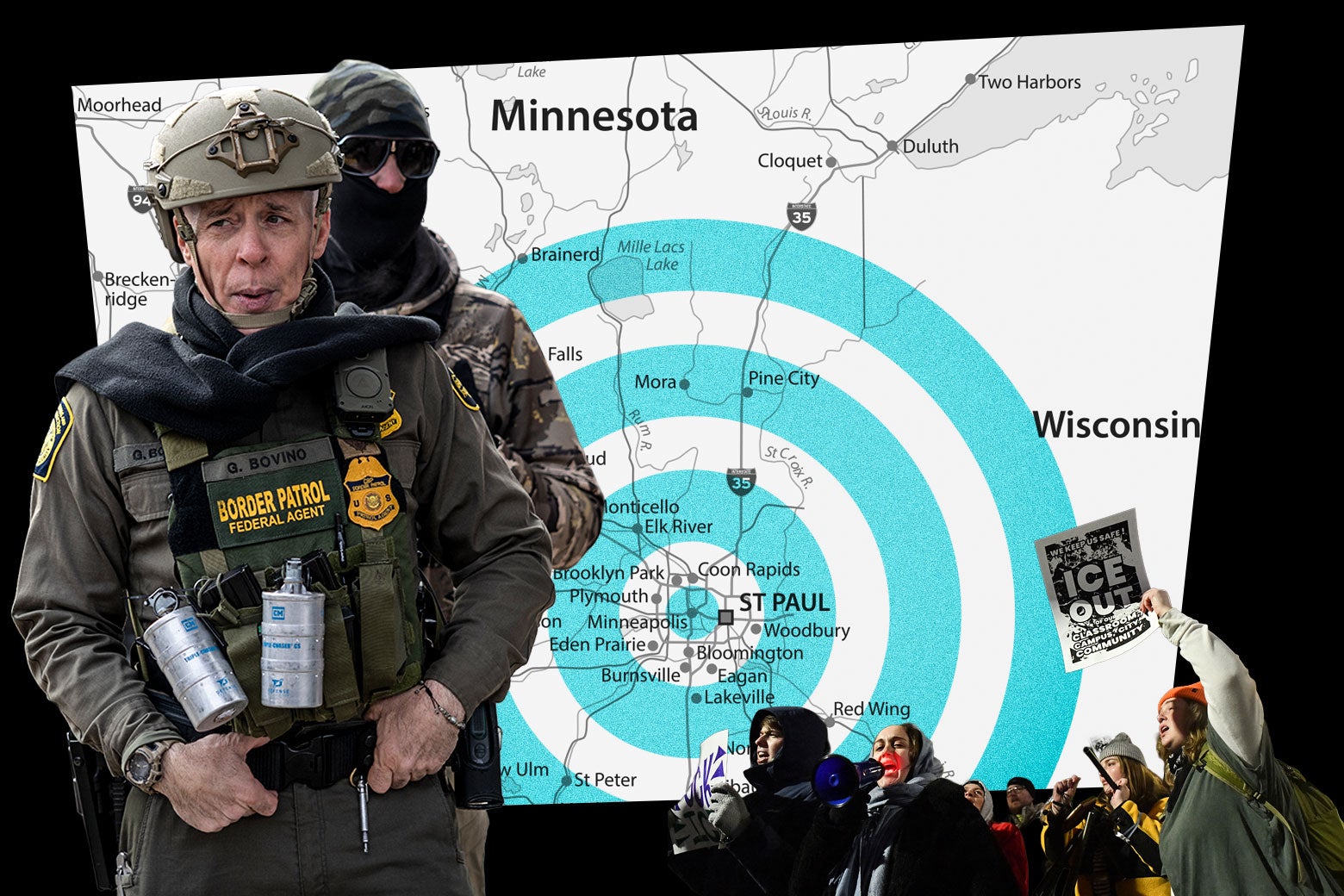
Maye Quade, who lives in the Minneapolis suburb of Apple Valley, emphasized just how ubiquitous immigration enforcement has become across rural, suburban, and urban Minnesota. ICE presence is so large it surpasses the number of local law enforcement members in the state’s 10 largest metro areas combined. These agents are not working from an organized list of known immigrants living in the U.S. unlawfully, let alone a judicial warrant; instead they are operating at random. Maye Quade says she’s observed agents just driving around her town “looking for kidnappings of opportunity,” which she described as agents idling their cars and simply waiting for Black, brown, or Asian Americans to walk by, as they take out the trash, walk their dog, or run into a gas station. “They will swarm that person, kidnap them, and take them away.”
Maye Quade realized she should use what she has witnessed to warn her colleagues in other states, along with friends and family who don’t live in Minnesota. Her video has garnered more than 3 million views. “It sounds like a wartime diary,” Maye Quade said in an interview with Slate, but it wasn’t only that the senator gave a no-frills, boots-on-the-ground perspective that drew so much attention to her video. It was the fact that she simultaneously was offering advice on how to deal with federal immigration agents when they come to your town.
Two days after Maye Quade posted her TikTok, the Department of Homeland Security announced it had launched “Operation Catch of the Day” in Maine, the latest state to face an onslaught of federal agents. I asked Maye Quade what advice she would give residents there and across the country as they begin to deal with federal immigration agents.
Here’s what she had to say.
“The first thing is to either put together your constitutional observer training now, or reach out to folks in Minnesota to get that training.”
That’s a reference to the Handbook for Constitutional Observers, a project by the advocacy groups Immigrant Defense Network and COPAL. It was created in response to Donald Trump’s second term in office and offers guidelines on how to legally observe and document law enforcement interactions and inform people about their civil rights and due process. Francisco Segovia, executive director of COPAL, explained that this training is specifically designed for folks who are not directly impacted by the Trump administration’s immigration enforcement, but who can still participate in helping educate people about their constitutional rights.
“Set up your networks.”
In Minnesota, Maye Quade explained that communities organized themselves by zones or regions, and established Signal chats to communicate about federal immigration activity. Participants were each assigned a role; some were in charge of vetting people who want to join the group, while others were assigned to commute around the community and report on any immigration enforcement activity. Local mutual aid networks were also stood up to ensure those impacted by federal agents’ immigration enforcement actions had food, medicine, rides to work and school, and safety patrols around them.
“DOPA forms—delegation of parental authority.”
This is a document that gives someone authority to take care of a child when their parents or guardians cannot, for up to one year. The designated adult can make decisions about a child’s care, custody, and medical treatment, but it does not give permission for adoption or marriage. The DOPA form does not take away a parent or guardian’s ability to make decisions for their child. Having this prepared in advance can ensure a child is taken care of in a worst-case scenario, as Maye Quade recounted instances of parents shouting out the names of their children and their school while being arrested by federal agents in hopes that someone will help them.
“Have whistles with you in your car and keep your cellphone charged.”
Maye Quade reaffirmed that it is not illegal to record a federal agent. However, if you do happen to encounter an arrest, it’s important to understand that agents don’t usually differentiate between protestors and observers. Anyone who happens to be around can be targeted, with the senator emphasizing that you should close your car vents and turn off the heat in case you are pepper-sprayed or tear-gassed. It’s also a good idea to keep water or saline spray with you, as both can help remove pepper spray from the eyes.
“Businesses should get very familiar with what their legal rights are.”
Businesses should understand when they have the legal authority to keep people off their private property and how they can enforce a code of conduct. Maye Quade also suggested businesses be prepared for an I-9 audit, when federal agents inspect whether a business has confirmed their workers’ identities and work authorizations. This process does not require a warrant, but agents have to give employers at least three days’ notice.
Here, Maye Quade also emphasized that businesses should become familiar with federal agents’ tactics. In one case, “they used a ruse of a pretend car crash in the parking lot to lure a day care worker out of her house,” she said, while in other instances federal agents have asked passersby for help outside businesses only to arrest them instead.
“The people that are being taken are like us.”
Despite the Trump administration’s insistence that federal agents are targeting “the worst of the worst,” immigrants who have committed crimes or are in the U.S. without permanent legal status, that is not what Maye Quade has witnessed in Minnesota. U.S. citizens, lawful permanent residents, and people who have been legally admitted into the country are all being targeted right now. “It’s literally just anyone who’s Black, brown, or Asian. Most of them have status and have broken no law,” she said.