Listen to What Next:
 Apple Podcasts
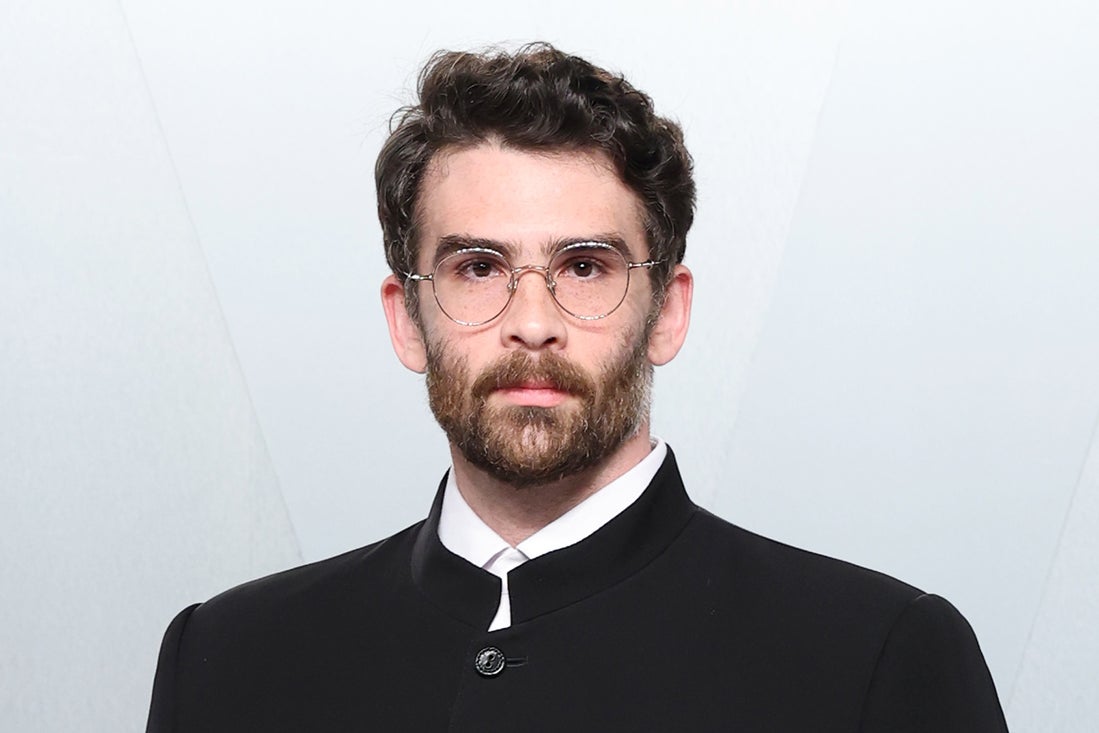
Hasan Piker is a Twitch streamer. He’s seen the same headlines you have. The ones explaining that after the U.S. took over Venezuela’s oil business back in January, Cuba got cut off. The result has been blackouts and uncertainty.
What’s happening right now is an extreme version of what the United States has been doing in Cuba for years, of course: using sanctions to control everyday life in a bid to get rid of a repressive communist regime.
It has not worked before. But now conditions are worse. And Piker wanted to investigate the ways in which the government has engaged in what he calls “economic warfare.” So, he and his group brought things to Cuba that they thought might help: medicine, food, and bicycles.
On a recent episode of What Next, host Mary Harris spoke to Piker about what he saw in Cuba, and who he sees as his audience. This transcript has been edited and condensed for clarity.
Mary Harris: You got pushback on your trip, as you might expect. Places like Fox News were kind of obsessed with the fact that your group stayed in a five-star hotel, and that you were at the Vanity Fair Oscars party and you flew to Cuba after that. I’m of two minds. I think it’s good to draw attention to the oil embargo that the U.S. has in effect, but also there is an element to what you did that looked from the outside like disaster tourism. Did you grapple with that at all?
Hasan Piker: Not even a little bit. First of all, there were 600 people that went. There were diplomats, foreign dignitaries, activists, advocates, journalists, and content creators. It was this massive trip with the purpose of delivering aid.
But my goal specifically was to go and link up with journalists on the ground. There’s an independent journalist platform called Belly of the Beast. They’re fantastic. I was very fond of their work already, and my goal was to go and set up a bunch of interviews and investigate how much of the problems of the island were actually a consequence of redistributive policies or government failures and how much of the issues were born out of the blockade.
Tell me about one person you met.
I interviewed doctors. These are just regular Cubans, some of whom have been pivotal in scientific achievements in Cuba. One doctor that I interviewed is Mitchell Valdés-Sosa. He’s a neuroscientist and played a role in creating the only working treatment for Alzheimer’s and dementia. Clinical trials ended in Cuba, and now they’re working on Phase 3 clinical trials in Canada. I asked about the impact of the blockade on academic research.
Some might look at this list of interviewees and wonder whether you are doing image rehab for the regime in Cuba, as opposed to something more investigative. What would you say to someone who has that reaction?
My goal ultimately was to go there and directly ask regular people. There are interviews that we have with cab drivers—it’s not just people who are playing a big role. We were asking ordinary Cubans, as well, about how they felt. I obviously have this opinion, and there’s research that has been conducted on the dangers of sanctions and the violence that it brings. I already know that that was a massive hardship, but I was more so invested in trying to make the invisible more visible. I wanted to show individual people and the hardships, but also pinpoint where there are hangups.
I want to pivot and talk about you a little bit. People talk about your audience as a kind of woke manosphere. I don’t know if you would take that as an accurate depiction of your audience, but I’ll throw it out there. Is that how you see it?
There’s definitely a lot of bros in my audience, for sure. They are woke, so, yeah, I guess it makes sense.
I’m asking about that because over the past couple of months, there certainly has been some evidence that the younger voters who went for Donald Trump in 2024 are maybe changing their minds. And it made me wonder if you, as a guy who’s in this space, are seeing your audience change.
That’s been going on for years. I’ve always had a lot of young men in this space who were a little bit rudderless. They didn’t really find a place in the Democratic Party. They had their opinions on certain issues and felt like the Democrats didn’t really represent those values at all.
The way you’ve described Democrats in the past … you’ve said that they sound “fake as shit.” And so it’s like they were feeling that, is what you’re saying, from the political party, right?
They’re insincere and elitist and out of touch and smug in many respects, from the perspective of a young man. They grow up in this environment where they’re asking, “What are they offering me other than just a lecture?” That’s their perspective. Many of them were also going down the alt-right pipeline that was huge in the 2016-to-2018 era. I have been able to, in my opinion, pull a lot of those people out of that pipeline.
You feel like you’re in the conversion business.
In some respects. When I’m talking about, like, anti-Blackness, white supremacy, I’m not talking to Black people, because Black people know it. They experience it every day. When I’m talking about transphobia, I’m not talking to trans people. I’m talking to transphobic people, or people in the margins who are at least somewhat more charitable to my perspective. People who can be convinced of the truth.