Sign up for the Slatest to get the most insightful analysis, criticism, and advice out there, delivered to your inbox daily.
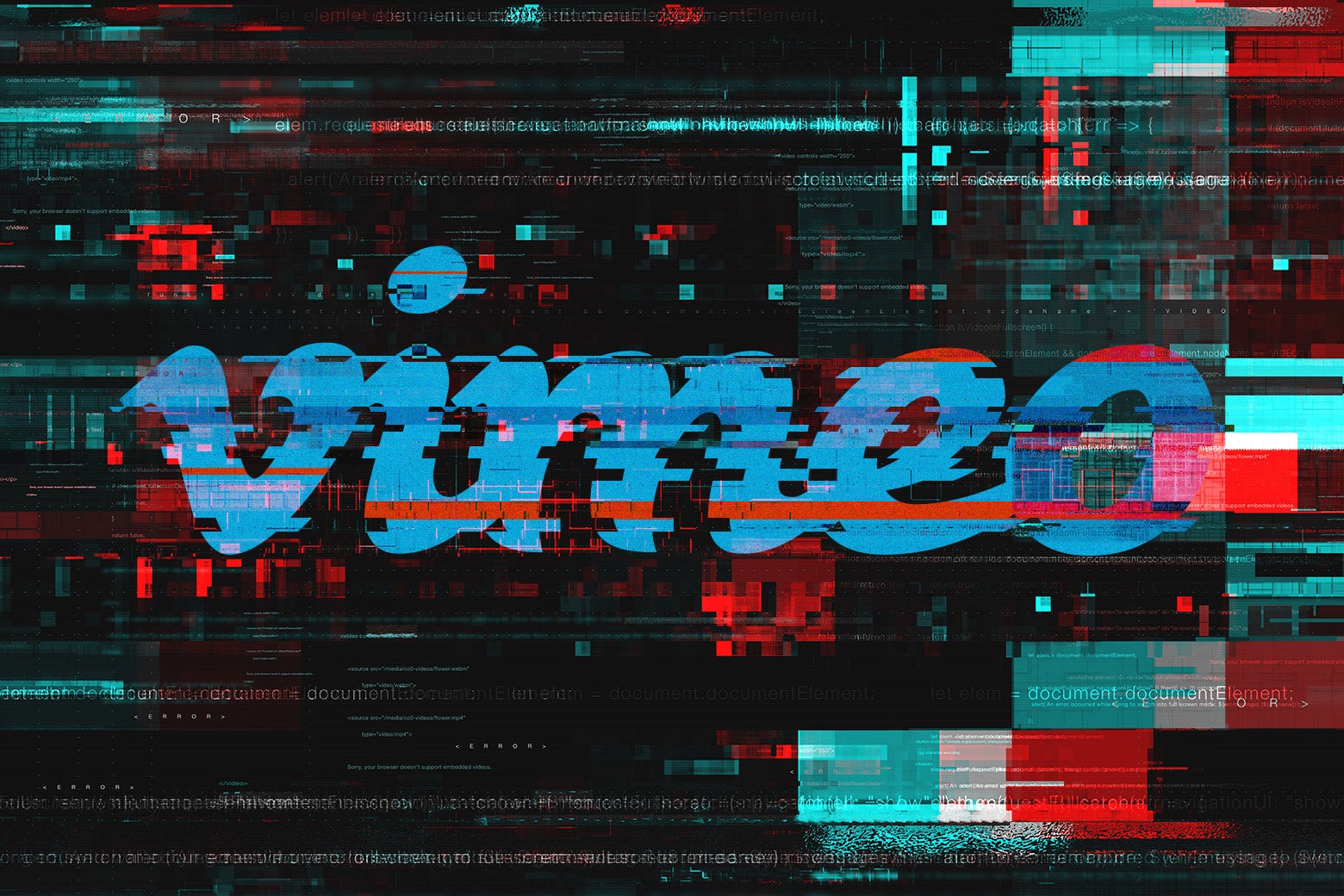
The private equity model has struck again—this time, even more quickly and mercilessly than usual. Vimeo, the pioneering American online-video platform beloved by visual storytellers of all stripes, has laid off large swaths of its global staff just four months after its $1.38 billion acquisition by Italian tech developer Bending Spoons.
At the time of the purchase, Vimeo CEO Philip Moyer had claimed that “Bending Spoons has tremendous respect” for his employees and was “committed to expanding our product across all segments.” The Milan-based company appeared to back this up at first, with its CEO describing his business as “acquiring companies with the expectation of owning and operating them indefinitely.”
Flash forward to Wednesday, when ex–Vimeo engineer Derek Buitenhuis—a 13-year company veteran who’d left the site in November—shared on social media that “almost everyone” had been laid off the day before, “including the entire video team.” Affected staffers soon confirmed the sweeping losses, which hit more than 1,000 employees worldwide. Other now-former employees rather pointedly noted the timing of Bending Spoons’ recent incursion; Buitenhuis even added that it “feels bad to see something you built get Spooned.”
The layoffs have thrown Vimeo’s future into doubt, raising concerns about what happens to the sweeping archive of influential videos and films the platform has hosted for more than two decades—as well as the myriad services that rely on its software. Even before it got “Spooned,” the once-creator-friendly Vimeo had lost its way. But its wholesale gutting portends an even more uncertain future for talented filmmakers already struggling in the A.I. age.
Bending Spoons’ M.O. is apparent from even a cursory look at its portfolio and record. The Dutch file-service company WeTransfer was purchased by the Italian company in 2024 and shortly lost three-quarters of its staff. The social network Meetup, also acquired in 2024, saw most of its employees laid off almost immediately. Evernote, the task-management app, was bought in 2022 only to shed more than half its staff and move operations from California to Europe, as private equity consultant Colin Keeley has recounted.
It’s been the same story for many other unlucky targets over the past few years, from Brightcove to Mosaic to Filmic. Bending Spoons’ lucrative process, a strategic business pivot from years of failed app development, involves loads of venture capital fundraising, which is then spent on platforms that have lost market prowess in the post-COVID era. The companies’ highly compensated workforces are heavily slashed, and their operations are typically transferred to Milan in order to centralize the Bending Spoons family. This hostile mode of “Spooning” has worked well enough that it won’t let up anytime soon; in just the past couple months, the private firm also brought AOL and Eventbrite into its portfolio.
Vimeo was a casualty in large part because the once-indispensable app had already been in decline years before Bending Spoons came in. In response to Derek Buitenhuis’ X post, an ex–Vimeo engineer who’d departed in 2024 pinpointed the bad timing of Vimeo going independent and public in 2021 (when Big Tech as a whole was riding high), then suffering alongside the rest of its sector in 2022 (when elevated interest rates steeply curbed the tech industry’s free spending). Then-CEO Anjali Sud had attempted to pivot Vimeo’s focus, from serving as a platform for professional film- and video-makers to acting as a software contractor for myriad other businesses, offering up everything from basic streaming tech to “AI-powered video tools.”
The move did, at least, bag some big clients like the Criterion Channel, Starbucks, and the U.K.’s National Theatre. Yet this represented a major vibe shift in Vimeo’s M.O., transforming it from a unique gallery of creative showcases to just another software-as-a-service vendor attempting to stand out amid the onslaught of the short-form, vertical, and A.I. video era. It was also a moment when many tech companies were pulling back their spending, limiting the number of potential clients.
“There was some inevitable disappointment at losing the COVID-era momentum, but I think everyone figured we would refocus and pull through,” Andrew Rodland, a former Vimeo engineer who was laid off last September after 10 years with the platform, told me. “We at least tried to keep it a fun and unique place. But after Anjali left in 2023, the mood started to get less optimistic.”
The corporatization of Vimeo was also off-putting because Vimeo’s whole image, from jump, was to be something different from the other video platforms popping up in the transition to Web 2.0. The company was first built and launched in the mid-2000s, gaining attention as a more artistically inclined competitor to YouTube: Where the Google-owned video player acted as a hobbyist free-for-all, Vimeo would be marketed by its Hollywood-veteran executives as a virtual exhibit for, and curator of, serious cinephiles and technical wizards.
There was a lot Vimeo was willing to offer: high-definition streaming that YouTube then lacked, customizable embeds, and a staff of curators who’d willingly spotlight unknown users’ works on the front page—per judgment of merit, not merely virality. If YouTube was initially a forum where amateur, grainy recordings could be put up for funzies, Vimeo was the gathering place for those who cared about high-definition streaming as well as high-quality output that was free of ads.
For a while, Vimeo indeed served that purpose and then some. HBO’s much-acclaimed High Maintenance started off as a Vimeo-exclusive web series. Years before How to With John Wilson premiered on the same provider, the titular documentarian developed his distinct slice-of-life observational style through Vimeo-uploaded clips. The platform—via active recruitment and word-of-mouth and creator-friendly compensation streams—also attracted already-prestigious directors like Spike Lee, Joss Whedon, and Don Hertzfeldt, while also resurfacing lost media and obscure film libraries.
Yet the backing from parent company InterActiveCorp that allowed Vimeo to flourish would also invite its decline. When Vimeo use exploded during the pandemic lockdowns, IAC sold off the platform for a nice sum in 2021, counting upon the sense of optimism and expectations of future growth so pervasive among techies in that era. But when those expectations weren’t met, the newly independent Vimeo C-suite couldn’t figure out an ideal pivot. Already bogged down by costs incurred from hi-def streaming bandwidth, lawsuits over the use of copyrighted music, multiple corporate acquisitions, and virtual storage capacity, Vimeo flailed and trimmed corners where it could, through layoffs and reduced multimedia interoperability and limits on nonpaying consumers. Even going back to its CollegeHumor roots, by providing the streaming infrastructure for the site’s successful relaunch as Dropout TV, didn’t help the bottom line.
Vimeo in the year 2025 was a platform unsure of itself, attempting to behave like a stand-alone media empire while playing catch-up with evermore potent competitors and offering all sorts of additional side products instead of focusing on what made it a name: the creators. Now, a whole lot of brilliant filmmakers, careful archivists, and video specialists avoiding the pressing algorithmic demands of the YouTube–TikTok duopoly have to worry about what may happen to all their works—and figure out where they can possibly go next. Private equity–style tactics did kill Vimeo, but it was also injured before then, thanks to corporate greed and multiple unforced errors. In a very literal sense, the future of internet video looks narrower than ever before.